


With Gleistein as your partner, you can simply sit back and relax
We take responsibility for the entire life cycle of our products. In this way, we guarantee optimum use and maximum service life of our perfect connection solutions. To make this possible, it takes more than just selecting the right product.
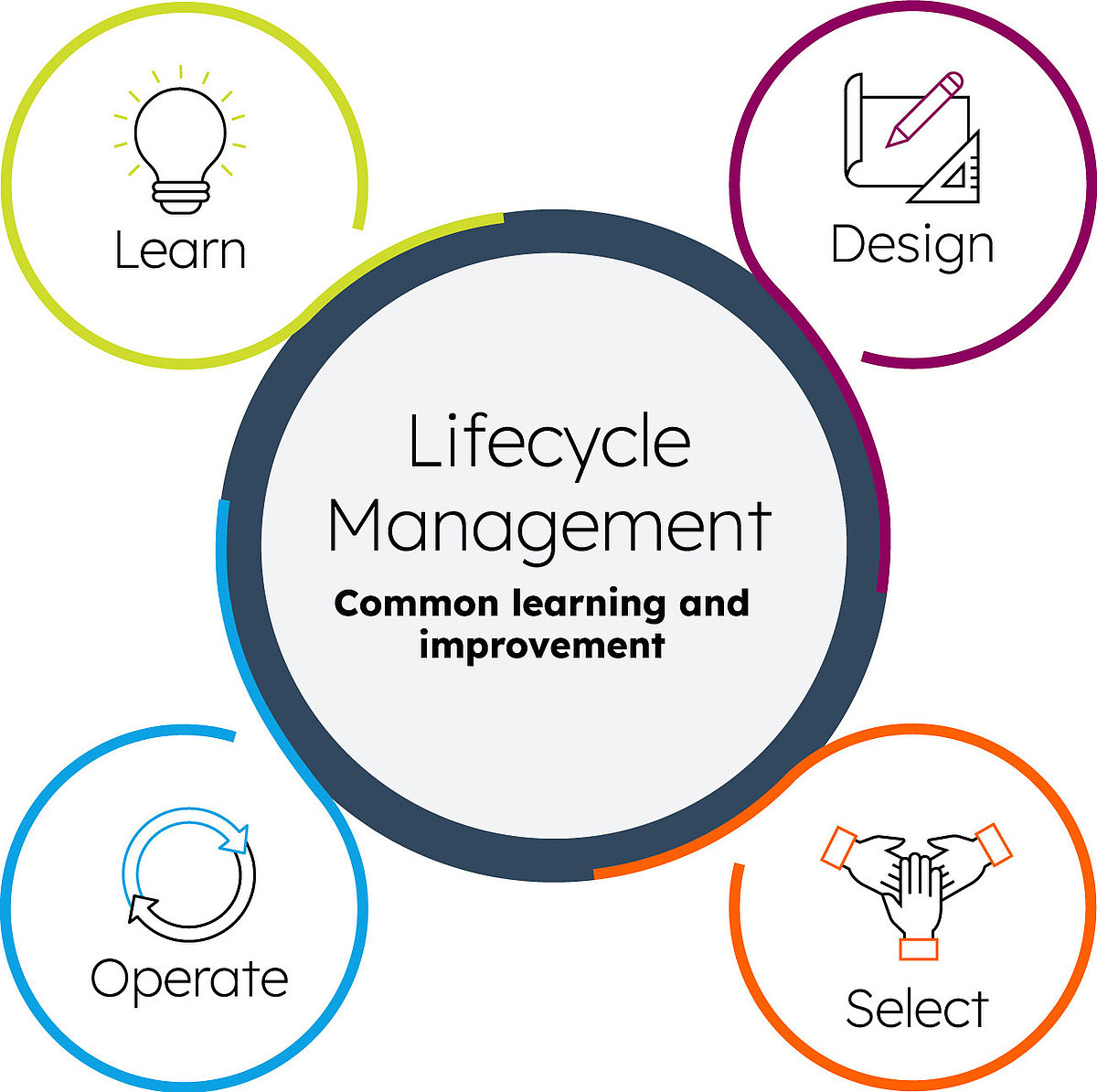
The life cycle of a rope incorporates four main phases:
1. Design, 2. Select, 3. Operate, and as well 4. the important learning phase, which feeds back into the design phase to continuously improve our application solutions.

Design
With Gleistein you are best equipped for any application. All our technical know-how, state-of-the-art production facilities and first-class raw materials are used to find the perfect solution for every connection. With the help of your experience, we are also constantly developing our product range.


Operate
While the operational phase of the rope is in your hands, it goes without saying that Gleistein will not leave you on your own here either. With the help of our Line Management Plan and Rope Tracking System, you are spared unnecessary effort. Inspection routines and organisation of replacement cycles run almost by themselves, and you do not have to risk any losses in terms of the longevity and reliability of your ropes. We also offer individualised in-service training to support your team on site for optimal use and professional inspection.

Line-Management-Plan
To make operation and inspection as straightforward as possible for you and to ensure the longevity and overall safety of your connection solution, Gleistein offers a customised Line Management Plan. The LMP describes all requirements for maintenance, inspection and retirement during the operational phase of the rope. Among other things, it contains the following information:
- Number, location and duration of operations
- Record and plans for rope inspections
- Retirement criteria of the manufacturer and operator
- Reports on tests and inspections that are scheduled and were conducted
An LMP is a crucial tool and should be prepared for each rope in operation. It should be maintained by the ship operator and passed on to his successors. This is the only way to ensure that this important knowledge is preserved and can be retrieved at any time.
We would be happy to draw up the Line Management Plan together with you or on our own initiative.

NFC Chip
The integrated NFC chip can be scanned with any modern smartphone – no matter if Android or iPhone. It stores product specifications, application tips and quick links to certificates, website content and important contacts.

Mooring Rope Manual and Pocket Guide
The comprehensive Mooring Rope Manual contains everything you need to know about installing ropes, their proper use, assessing their condition and making repairs. And the durable Pocket Guide is a practical tool for assessing our ropes and is readily at hand wherever you are

Wear zone managment
Gleistein offers several solutions to protect mooring systems from damage.


